
This is a simple coloring page for your child but with no color coded hints.

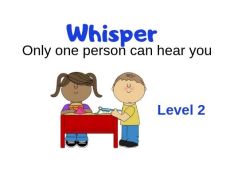
Help your child understand the levels of their voice; silent, whisper, quiet, normal, and loud.
These cards will help you show your child when it’s okay to use what voice levels.
Print off to postcard size or smaller if needed. Laminate for longer use.
Using Paint Chip strips are a cheap (actually free) way to help your child learn about the wonderful world of color. To see that there isn’t just one shade of green, red, blue, orange, etc.; it’s like opening that BIG BOX of crayons when you were little and seeing the eye-popping, jaw-dropping wondrous world of color!
A while ago. I posted color pockets; this is great for one of these color match ideas (just remember that I cut off the top of the envelope). For the other idea you just need glue, scissor and wooden clothespins.
For the Clothespin Matching: Just trim off a strip of the Paint chip strip and glue to the end of the clothespin and allow to dry. It’s that easy.
For the Color Pocket; just use Paint chip strips in the colors of your color pockets and let the children match the strips to the pockets. It’s that easy.


These sheets will teach math with dominoes!
First up is the easy math with numbers 0-5. Then we will move onto 6-12.

These Color Chip Word Slides are easy to make and better yet….FREE!
You can get these color chips at any paint store or big box store (Lowe’s, Menard’s, etc.) Grab as many as you like. If you are doing this for a classroom; you can ask an associate of the store and sometimes they will give you a load of them; still wrapped in the plastic!
I just picked out a square paint chip that would be in the same color category as the multi-color chips and I was set.
I cut a thin strip from the multi-color chip for my letters. Then cut a 1- inch square from the single color paint chip. Added a slit above and below the 1-inch square (just a tad longer on each side of the square) to slide in the letter strip. I used an exact-o knife to cut out the square and make my slits.
I started off using a regular fine point permanent marker and it just wasn’t big enough, so I went to a chisel point permanent marker for my letters and the words. You will notice that I didn’t use the last color square on the letter strip. This was to give the children an area to hold and be able to move the letter strip.


All are card sets except for A Day with Our Dogs.
These pages are large print and the words are easy for beginners.
“Let’s Play” are actually cards that can be printed off to postcard size (5.5 x 4.3 inches). You can go smaller if you wish.
With the card sets; you can use a hole punch and add a ring to it for a flip chart or two rings for a book.
Easy Reader- My First Day of School!

Consonant Blends
A consonant blend consists of two or three consonants whose sounds are blended together. Each letter sound is heard in the blend. The most common beginning consonant blends include the following: bl, br, cl, cr, dr, fl, fr, tr, gl, gr, pl, pr, sl, sm, sp and st. Blends can also occur at the end of a word as seen here in the word “past”. The common three consonant blends include: str, spl, and spr.
Teachers will usually teach the “L” blends first (bl, cl, fl, gl, pl and sl) and then move onto the “R” blends.
Consonant Blends and Consonant Digraphs
While the consonant blends allow you to hear the sounds of both letters in the blend; the consonant digraph brings letters together to create one sound. The most common digraphs are ch, sh, th, and wh.

These sheets will teach your children math and money!
Sheets will start off easy in 1-5 and begin to get more difficult as they go on.


These packs give children (ages 2 and up) a chance to seek out objects in a picture and either check them off a list when found (for the younger ones, or count the objects in the picture (for the older ones).
The children can also use BINGO chips or dried beans and cover up pictures as someone calls out a picture. (Can you find the sun?, Can you find the sand pail? etc.).
Seek and Count-Back to School!
SEEK and COUNT! Farmer’s Market!


These packs contain positional or directional words (up, down, over, under, etc).
It’s important to learn these words at an early age so that young ones understand and convey direction better.


 buildingblocksabc.home.blog